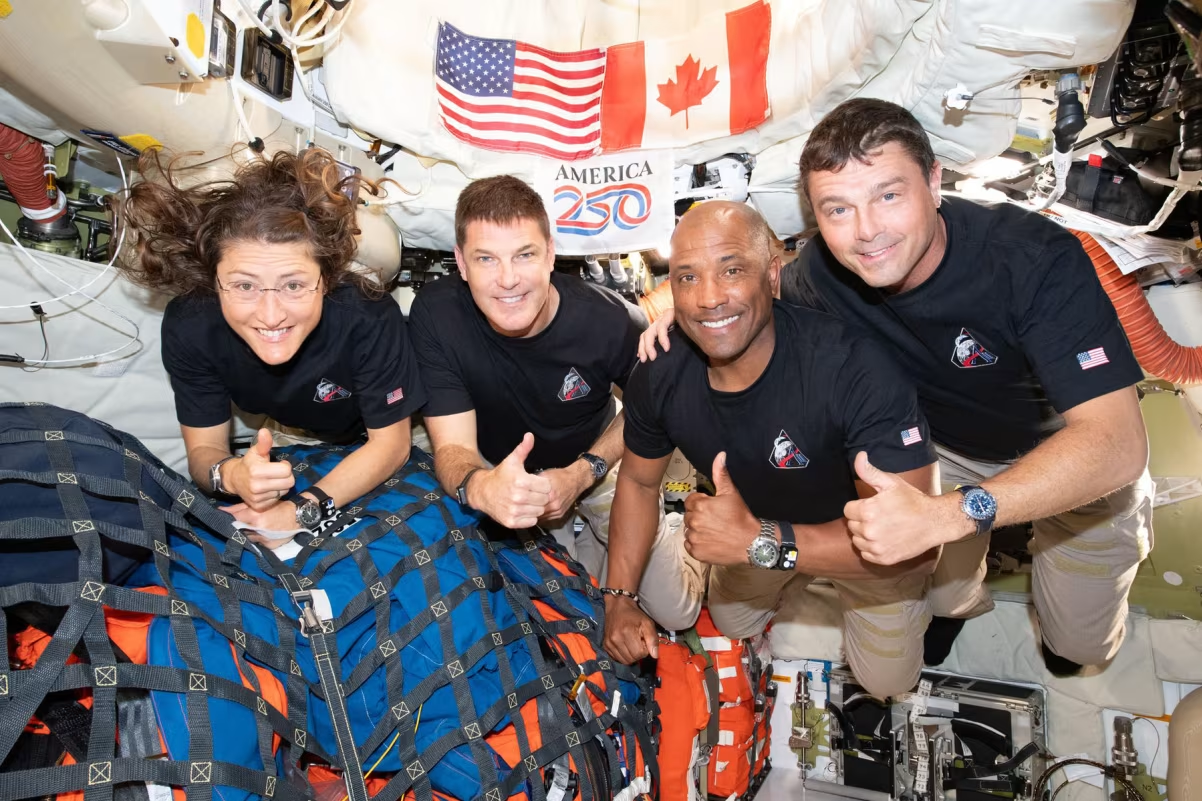
Before four Artemis II astronauts strapped into their Orion capsule to soar toward the moon, a tiny bit of each of them was already on board.
Incubated in a small triangular container stowed on the spacecraft just before launch were four USB-size “avatars,” which rode along with the history-making moon mission. But in many ways, their journey is just beginning.
Known as organ chips, the avatar crewmates are made with bone marrow tissue derived from cells donated by their full-size counterparts — NASA’s Reid Wiseman, Victor Glover and Christina Koch, and Canadian Space Agency astronaut Jeremy Hansen — and researchers believe the experiment could soon unlock unprecedented insights about the effects of space on human health.
The AVATAR, or A Virtual Astronaut Tissue Analog Response, study essentially allows scientists to simulate what happens to astronauts’ organs in deep space.
It offers a more granular look at where and when changes in the body begin, compared to traditional post-flight medical testing, according to Lisa Carnell, Director of NASA’s Biological and Physical Sciences Division. “We’ve never done this before,” she said.
Because researchers chose to focus on bone marrow for this organ chip experiment, Carnell expects to gather data on the crew’s immune responses to traveling through the deep space and the higher-radiation levels associated with such endeavors. Those insights could lead to individualized treatments that ease the way for the astronauts to embark on longer missions — perhaps deeper into the cosmos.
“When we send these alongside Christina, Victor, Reid, Jeremy, they all may respond different to the deep space radiation environment. Somebody may be radio resistant and will learn something new, and you know, or maybe somebody is more extremely susceptible to radiation,” Carnell said before the mission began. “Well, now we can tailor medical kits that we can make personal lives for them on their journey. They go to Mars, they go to the moon, to live for long duration. We can send the right therapeutics with them to make sure they stay healthy and that they can thrive in those environments.”